
How Dental Implants Help Prevent Bone Loss After Tooth Loss
Loss of a tooth can happen for a variety of reasons. From advanced gum disease to injuries to tooth decay, teeth can be lost or extracted. As soon as a tooth is out of the socket, the support structures for that tooth (gums, jawbone, and connective tissues) begin to deteriorate. Over time the jawbone is gradually absorbed by the body, resulting in bone loss.
This is why prompt treatment after tooth loss is so important. With the proper preparation, jawbone loss can be prevented, making tooth replacement much simpler and more effective. The key is stimulation of the bone, which keeps it strong and healthy. When it comes to tooth replacement, dental implants provide an all-in-one solution to preserve bone health, facial structure, and long-term oral function.
Why Bone Loss Happens After a Tooth Is Lost
Bone loss after a tooth is extracted or lost is the body’s natural response to lack of stimulation. Without a tooth root in the socket, the support structures break down and resorption takes place, leading to shrinking of the jawbone. This can leave neighboring teeth without proper support, resulting in shifting teeth and bite misalignment. Even facial appearance can be affected, making the jaw appear sunken or leaving visible indentations in the jawline.
The process of bone loss happens gradually, but it begins immediately following tooth loss. This is why delaying tooth replacement may increase bone loss over time.
How Dental Implants Preserve Jawbone Health
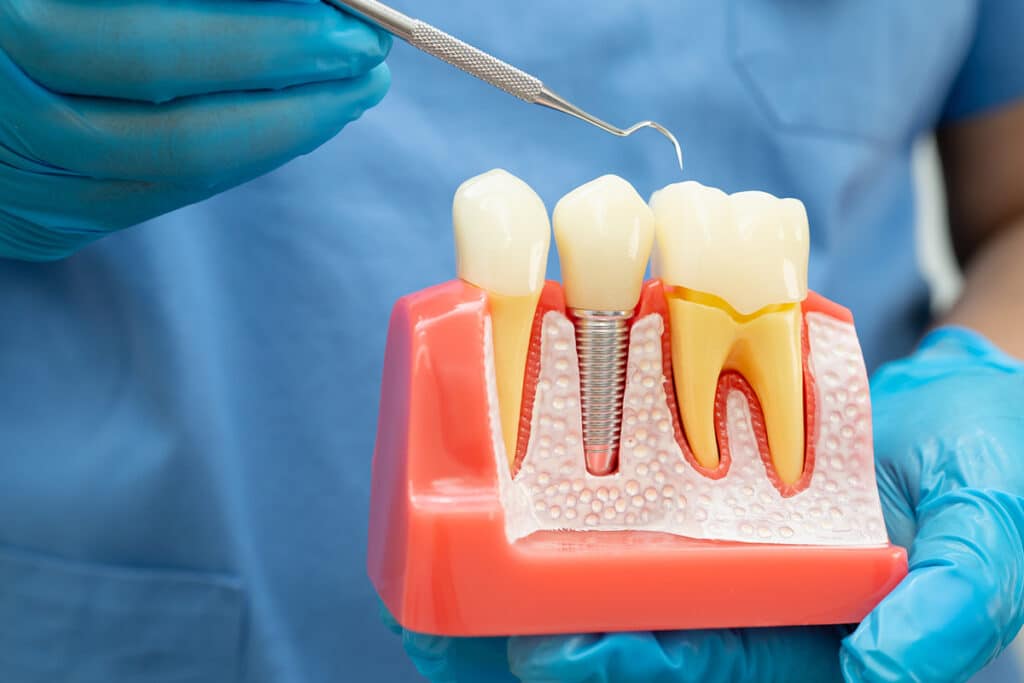
A dental implant replaces the natural root of a missing tooth with a titanium post. Titanium is a biocompatible material that fuses with the bone through a process called osseointegration. An implant can provide support for a crown to replace a single tooth. Multiple implants (4-6) can support bridges or dentures for widespread tooth loss.
Dental implants provide the necessary stimulation to prevent bone loss. As the bone fuses with the implant it is strengthened and keeps its natural structure.
Traditional bridges and dentures sit on top of the gums, which offers very little stimulation of the jawbone. Over time bone loss can still occur beneath these prosthetics. Many patients find that their dentures do not fit as well over time as the jaw bone shrinks.
What If Bone Loss Has Already Occurred?
You may be wondering if it's too late for you to avoid bone loss or to qualify for dental implants because you have one or more teeth that have been missing for a while. The good news is that there are procedures that can reverse bone loss for patients who are interested in dental implant restoration.
Bone grafting is a procedure that involves placing bone material in weakened areas. As the remaining bone tissue bonds with the new material, it strengthens the jaw and stimulates regeneration of natural bone. Over the course of a few months, a stable foundation is established for dental implant placement.
Benefits of Replacing Missing Teeth Early
By seeking treatment as soon as possible after the loss of a tooth, you can:
- Preserve jawbone volume and facial contours.
- Improve chewing ability and speech.
- Prevent shifting of surrounding teeth.
- Support long-term oral health and confidence.
Protect Your Smile and Your Jawbone for the Future
Preventing bone loss and preserving the strength of your jaw protects your smile and improves long-term oral health. It also helps you maintain a more youthful appearance over time. The sooner you replace missing teeth with dental implants, the easier the process and the better the outcome. Schedule a consultation with Braasch Oral Surgery today to determine whether dental implants are the right solution for your needs.
Frequently Asked Questions About Dental Implants
How soon after losing a tooth should I consider a dental implant?
As soon as possible. Bone loss begins as soon as the tooth is out of the socket and will only progress over time. Even if dental implants can not be placed right away, procedures can be done to preserve the bone.
Can dental implants stop bone loss that has already started?
In some cases dental implants can be placed when there is existing bone loss. The implants can be placed at an angle that maximizes existing bone structure. And the presence of the implants can stimulate regeneration of lost bone tissue.
Will I need a bone graft before getting a dental implant?
You will need a professional evaluation to assess bone density and determine if bone grafting is necessary. Digital imaging and advanced technology makes this process simple and comfortable.
Are dental implants a permanent solution for missing teeth?
In most cases dental implants provide a permanent replacement for missing teeth. Once the implant has successfully fused with the bone, the bond can last a lifetime.
How long do dental implants last?
With proper oral hygiene, regular dental checkups, and healthy lifestyle habits, dental implants can last for decades and often for a lifetime. While the restoration attached to the implant may eventually need maintenance or replacement, the implant itself is designed to be a long-term solution for replacing missing teeth.
At Braasch OMS, we are committed to providing exceptional care through the expertise of our board-certified oral and maxillofacial surgeons, advanced technology, and a personalized approach to treatment. Whether you are considering dental implants or another oral surgery procedure, we take the time to understand your needs and create a treatment plan designed for long-term success. We are here to help you restore your smile with confidence. Contact us today to schedule a consultation.